
The short answer
For most people with a missing tooth and healthy gums, yes. Dental implants cost more up front than a bridge or a denture, but they replace the tooth root as well as the tooth, which keeps the jawbone stimulated and leaves the neighboring teeth untouched. Published research puts ten year implant survival at roughly ninety to ninety five percent. The trade off is time, since most cases take three to six months.
Losing a tooth changes more than a photograph. It changes how you chew, how you sound, and over time it changes the shape of the bone underneath the gap. So when patients ask whether implants are worth it, what they are really asking is whether the extra cost and the extra months buy them something a simpler option would not.
This guide walks through what you actually get for the investment, how implants compare with dentures and bridges, what drives the price, and how to tell whether you are a good candidate. If you would rather talk it through in person, our team offers implant consultations at our Palmdale office.
What you are really paying for
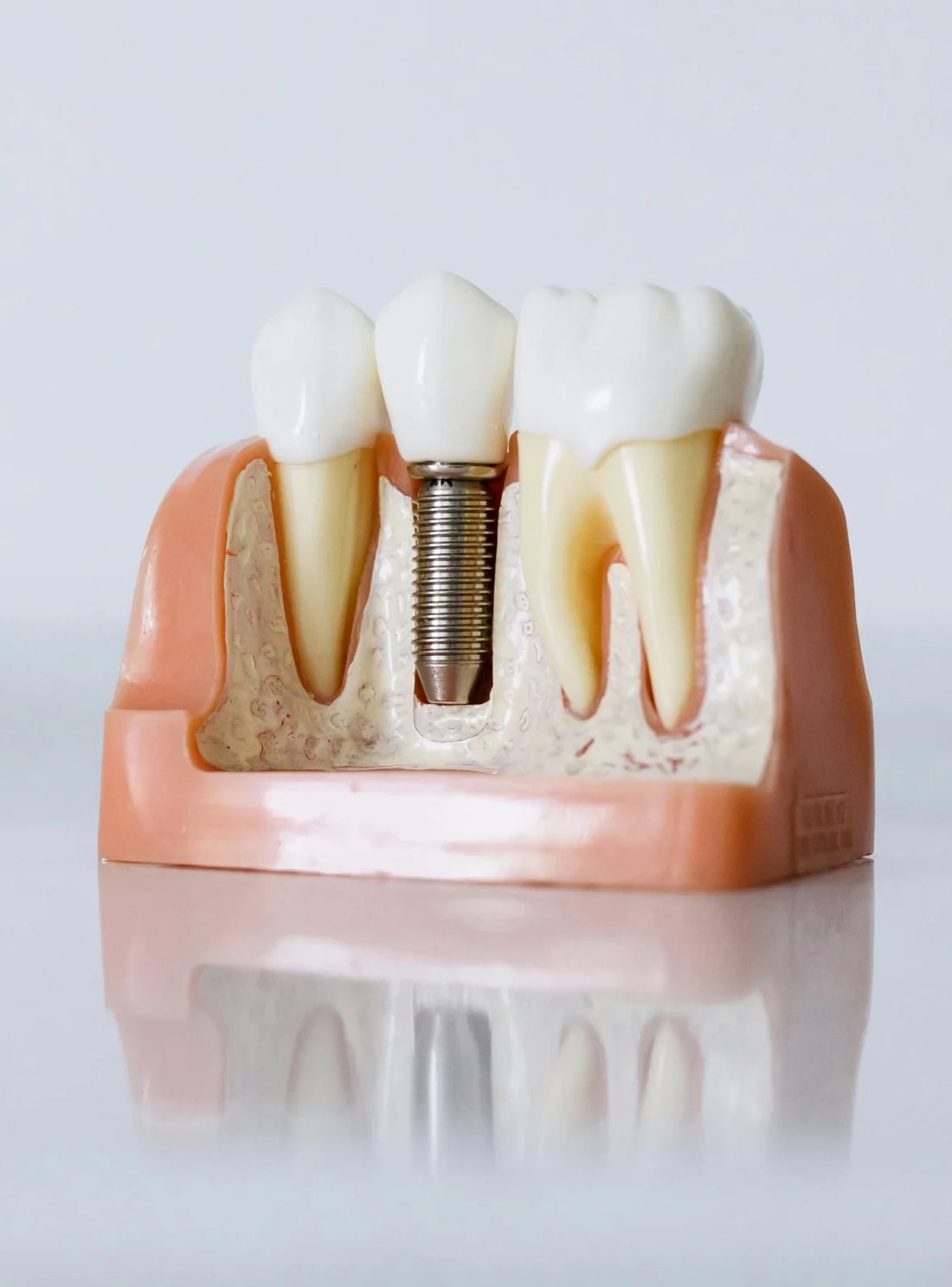
A denture or a bridge replaces the part of the tooth you can see. An implant replaces the part you cannot. A small titanium post is placed into the jawbone where the root used to be, and over the following months the bone grows against it and locks it in place. That single difference is behind almost every advantage implants have.
Because the post behaves a little like a root, the bone around it keeps getting the pressure it needs to stay dense. Bone that loses its root stops getting that signal and starts to shrink, and most of that loss happens in the first year after the tooth comes out. That is why a gap left alone for several years sometimes needs grafting before an implant becomes possible at all.
The second thing you are paying for is independence. A traditional dental bridge has to be anchored to the teeth on either side of the gap, and those teeth have to be reshaped to carry it. An implant stands on its own and leaves healthy enamel alone.
How long do dental implants actually last?
Two parts, two answers. The implant post itself is designed to stay put indefinitely, and long term studies commonly report survival around ninety to ninety five percent at the ten year mark. The crown on top is a wearing part, much like a filling or any other restoration, and may need replacing somewhere around the ten to fifteen year point depending on your bite and your habits.
None of that is automatic. Implants can fail, and the things that cause failure are mostly predictable: smoking, uncontrolled diabetes, untreated gum disease, grinding, and skipping the cleanings that keep the tissue around the implant healthy. Looking after an implant is not complicated, but it is not optional either. We cover the routine in our guide to caring for dental implants.
The American Dental Association keeps a plain language overview of implant treatment if you would like a second, independent source while you are weighing this up.
Implants, dentures and bridges compared
Each option solves a slightly different problem, and the right answer depends as much on your jaw and your budget as on the tooth itself.
| Dental implant | Dental bridge | Denture | |
|---|---|---|---|
| Replaces the root | Yes | No | No |
| Helps preserve jawbone | Yes | No | No |
| Affects neighboring teeth | No | Yes, they are reshaped | No, but clasps may rest on them |
| Fixed or removable | Fixed | Fixed | Removable |
| Typical time to complete | Three to six months | Two to three weeks | Two to six weeks |
| Up front cost | Highest | Middle | Lowest |
| Expected service life | Post often decades, crown ten to fifteen years | Around ten to fifteen years | Relined periodically, replaced every five to ten years |
| Daily care | Brush and floss as normal | Needs threading under the bridge | Removed and cleaned daily |
If you are replacing a full arch rather than a single tooth, the comparison shifts again. All-on-4 and All-on-6 implants use a small number of posts to carry a full fixed set of teeth, which is a different proposition from either a single implant or a conventional denture.
What drives the cost of dental implants
There is no single price, and any practice quoting one before they have looked at your jaw is guessing. The figure depends on how much work sits underneath the visible tooth. The main variables are:
- How many teeth you are replacing. A single implant and a full arch are different orders of magnitude.
- Whether preparation is needed first. An extraction, a bone graft or a sinus lift each adds a stage.
- The type of restoration. A single crown, a bridge carried on implants, or a fixed full arch all price differently.
- The condition of the surrounding gums and teeth. Active gum disease has to be treated before implants are placed.
- Materials and planning technology used for the implant and the final tooth.
Two things are worth knowing before you compare quotes. The first is that the lowest number is not always the complete number, so ask specifically whether the quote includes the implant, the abutment, the crown and the follow up visits, or only some of those. The second is that cost and timing can usually be managed: we have financing options that spread treatment over time, and any current offers are listed on our site. If insurance is part of the picture, our team verifies your dental benefits before treatment begins so you know where you stand.
Are you a candidate?
Most healthy adults are, but the evaluation is genuinely worth doing properly rather than assuming. Before recommending implants we look at:
- Your dental and medical history, including any medications that affect healing or bone
- The health of your gums, since implants need healthy tissue around them
- The volume and density of bone where the implant would sit
- Your bite and whether you clench or grind
- What you want the result to look and feel like
Being told once that you do not have enough bone is not the end of the conversation. Grafting techniques have moved on considerably, and plenty of patients who were ruled out years ago are candidates today. It adds a stage and some months, but it is worth asking again.
What the process looks like
- Consultation and imaging. We examine the site, take the imaging we need, and talk through the options, including the ones that are not implants.
- Preparation, if required. Extraction, grafting or gum treatment happens first and is allowed to heal.
- Placement. The implant post is placed. Most patients describe this as more straightforward than they expected, and normal activity usually resumes the next day.
- Healing. Three to six months while the bone fuses to the post. A temporary tooth can usually fill the gap during this time.
- The final tooth. The permanent crown or bridge is fitted and adjusted to your bite.
Replacing one tooth is the most common version of this. If that is your situation, our page on single tooth implants covers it in more detail.
How to compare implant providers
Rankings and star counts only tell you so much. What tends to separate a good implant experience from a frustrating one is less glamorous:
- A consultation that includes proper imaging rather than a quick look
- A written treatment plan that lists every stage and what each one costs
- Honesty about the options that are not implants, including when a bridge or denture is the more sensible choice
- Clarity about who handles complications, and whether surgery and restoration happen under one roof
- A maintenance plan for after the work is finished, not just up to the day the crown goes in
If a provider will not put the full sequence in writing before you commit, that is worth paying attention to.
Implant consultations in Palmdale
Our Palmdale practice sees patients from across the Antelope Valley, including Lancaster, Quartz Hill, Acton, Littlerock and Leona Valley. You can read more about the treatment itself on our dental implants in Palmdale page, or about the practice generally on our Palmdale dentist page.
Farzad Dental, Palmdale
623 West Ave Q, Suite B
Palmdale, CA 93551
Monday to Friday, 8:30am to 5:00pm
(661) 224-9333
Frequently asked questions
Are dental implants worth the money compared with a bridge?
Does dental insurance cover dental implants?
Is it worth replacing a back tooth nobody can see?
What is the actual success rate of dental implants?
What happens if I just leave the gap alone?
I was told I do not have enough bone for implants. Is that final?
The bottom line
Implants are not the right answer for everyone, and a good dentist will tell you when they are not. But for a healthy adult replacing a missing tooth who expects to keep the result for a long time, they usually are worth it, because they are the only option that deals with what is happening below the gumline as well as above it.
The honest way to find out is a consultation where someone looks at your jaw, explains what they see, and gives you the alternatives in writing. That is what we do.
Thinking about implants? Book a consultation at our Palmdale office or call (661) 224-9333.